


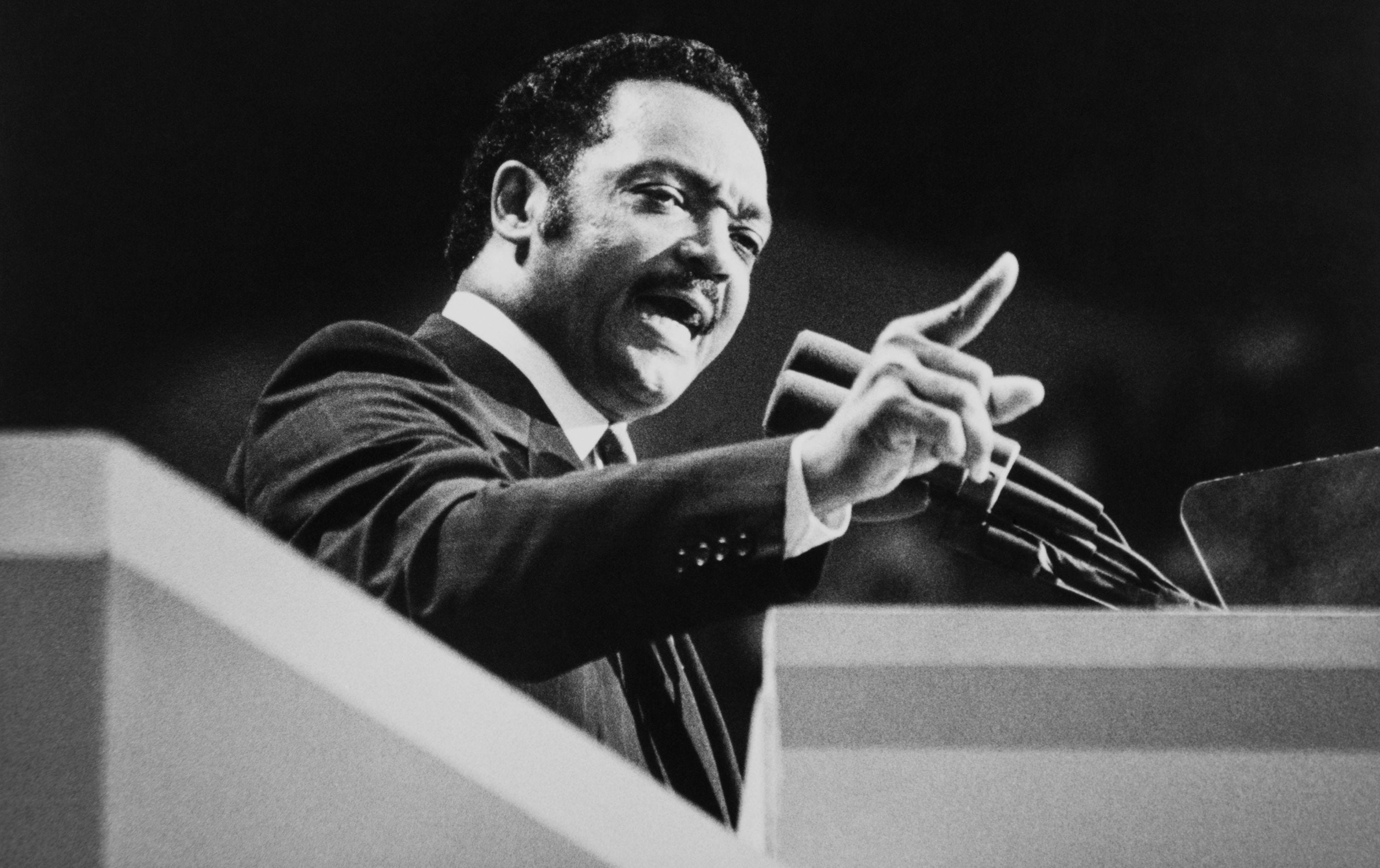
Like everyone else this past week, I have spent some time reflecting on and appreciating Reverend Jesse Jackson’s life and legacy. But, what may be different from everyone else’s reflections on Reverend Jackson is that mine are deeply personal because Reverend Jackson wasn’t just a towering public figure that I admired, he’s “Uncle Jesse”, my godfather.
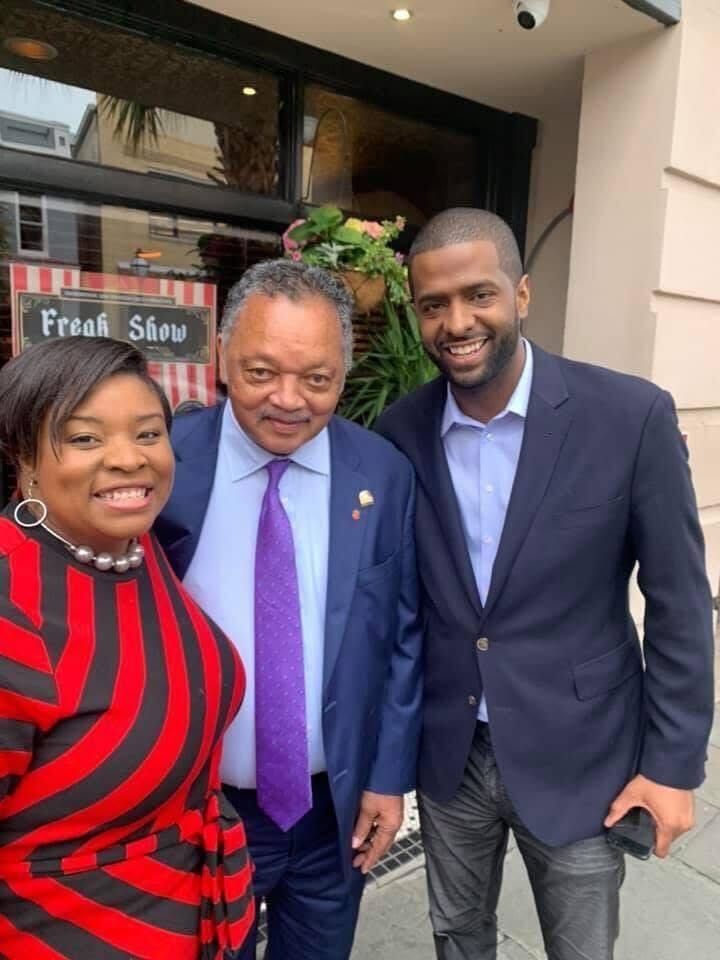
My father, Cleveland Sellers, was a founder of the Student Nonviolent Coordinating Committee or “SNCC.” He worked closely with Uncle Jesse who was an active leader in Dr. King’s Southern Christian Leadership Conference or “SCLC.” Both were young men roughly the same age, both were South Carolinians, and they developed a close bond through the Movement.
Soon after I was born, my father chose Uncle Jesse as my godfather.

Like Uncle Marion (Marion Barry), Uncle Julian (Julian Bond), and Uncle John (John Lewis), and countless others from the Movement that my father befriended, Uncle Jesse would often call our house, and he would do what any uncle does when you pick up the phone – ask how school is going and then ask to talk to your parents.
He would occasionally come to Denmark when he was visiting South Carolina, and over the years as I grew older, I would run into him often and we’d catch up on life, what I was working on, etc.
Several incredible reflections have been written about Uncle Jesse this past week, and I’ll provide a few at the end of the article. For me, as I think about him and the political moment we find ourselves in, a few things come my mind that I want to make sure that in our reflection of him, we keep with us as we move forward.
First, Uncle Jesse was a true populist that was ahead of his time on many of the issues that we still grapple with. He was an early, vocal proponent of a Palestinian state, and sought to mainstream pro-Palestinian positions into the Democratic Party.
He literally coined the phrase and created the first real, multi-racial “Rainbow Coalition” in his presidential runs uniting a then-Mayor Bernie Sanders and white progressives from New England with Black Southerners, Native communities, West Virginia coal miners, and Latino farm workers. As white progressives continue to have challenges connecting with older Black Southern voters in particular, they should look to the unique mix of populism, inclusive capitalism, and spirituality that only Uncle Jesse could comfortably reconcile.
A politics that only talks about raising the minimum wage and single payer – two issues that many African Americans align with but only tell a part of the picture of what matters to us – but that doesn’t also have the same energy for a Black restaurant owner in Denmark, South Carolina will always miss the mark with us. This combination came natural to Uncle Jesse because it’s a natural marriage for many of us. Others should take note.
Second – as many commentators have noted – the Clinton and Obama presidencies were made possible because Jesse Jackson negotiated to change the rules in the Democratic presidential nomination process to a proportional system and away from a “winner-take-all” system.
As we look to 2028 for the next leader of our Party, creating space for insurgent candidacies is a part of Jesse Jackson’s legacy on the Democratic Party.
Lastly, I think Jesse Jackson’s impact on the private sector provides a very clear roadmap for how you do economic populism in a way that also resonates with Black voters.
Uncle Jesse’s Wall Street Project revolutionized how Wall Street hired and promoted Black professionals in Wall Street and the professional services that service them forcing them to do business with us and hire us. Notably, President Trump was once a vocal support of the Wall Street Project.
He fought to diversify who our pensions and retirement plans invest in and invested with. He was one of the most vocal supporters of corporate supplier diversity programs radically altering how Corporate America did business with our entrepreneurs while also creating entire divisions within companies that created opportunities for Black professionals at companies across the country.
He was a vocal advocate for fairness in Black media ownership in response to major media mergers in the 80s and 90s and in diversifying Hollywood.
Uncle Jesse reminded the world that Black Americans want economic prosperity just like everyone else. And a part of that equation must include recognizing the value of Black entrepreneurs and our Black corporate and business community – groups that Democratic politics tend to ignore.
The diversity, equity, and inclusion that the Trump Administration now targets is the house that Uncle Jesse helped to build. It’s no coincidence that Republicans know what Uncle Jesse knew better than most: when you economically empower Black Americans and we leverage that economic power politically, we punch above our weight. And when we punch above our weight politically, we change the country every time.
You don’t get Barack Obama’s black donor base without the “DEI” and the Black executives that Jackson’s work created. Black economic power begets Black political power. Uncle Jesse knew this intimately in ways that many Democrats – including some Black Democrats – still fail to understand.
Uncle Jesse is Democrats’ roadmap in 2028. The Latino voters who voted for President Trump last time need to come home to a Democratic Party that doesn’t think rounding them up indiscriminately is “immigration enforcement.” No Black politician prior to Jesse Jackson made the kind of inroads with Latino voters that he did. Black voters who are estranged from the Democratic Party need to see a Party that understands both the need for reconstituting the social safety net and a more forceful government role in minority contracting, supplier diversity, and supporting minority businesses and that will be force again for forcing Corporate America’s hand on cultivating and supporting diverse workforces, boards, and suppliers.
We need to energize young voters and reinstitute the kind of mass voter registration drives that made Uncle Jesse a force to be reckoned with.
I will miss him dearly, as will my parents. My prayers go out to Aunt Jackie, Jessie Jr., Yusef, Jonathan, Santita, Jackie, and Ashley.
His life was a blessing upon us all, and his roadmap for true inclusion and prosperity will endure forever.
A few really good articles and tributes to Uncle Jesse are below and worth your time –
And, yes, I know many of these are paywalled, but good journalism often is. It’s worth the investment.
Jesse Jackson was in a league with MLK. Greatness is achieved through the power of RIGHT, PERSEVERENCE, DIGNITY, TRUTH, and RESPECT. Mr Jackson had all of this and a whole lot more. Few have aspired to his level of intelligence and understanding (HE WILL BE MISSED BY A GREAT NUMBER OF PEOPLE WORLD WIDE). May the great spirit in the sky take care of him!
Thank you Jesse Jackson for a life of constantly fighting for right.
It will be sometime before you are matched by anyone else.!!!
Rest In Peace, Jesse! 🇺🇸